The Price Of Comfort :
Why the Ummah Must Relearn How to Lead

During a recent visit to Cork, I struck up a conversation with my Uber driver. It turned out he was a Muslim from Pakistan who has lived in Ireland for 20 years.
Even though the trip only lasted about 15 to 20 minutes, we managed to cover a vast array of topics, from movies and culture to geopolitics. Drawing from a Bollywood quote, he noted how those films almost always portray Pakistan as the "bad guy." Moving forward, we agreed that much of the turmoil in the world today is rooted in the legacy of British colonialism. They divided the Ummah, monopolized its resources, seized its natural treasures, and effectively weakened its collective power.
The driver’s question hung in the air, heavier than the Irish mist outside the window. It wasn't just a critique of the locals in Cork; it was a microcosm of a global crisis of presence. We talk about the "Ummah", the global community of believers, as if it were a single, beating heart. Yet, when that heart is under surgical duress, why do so many of its cells seem dormant?
In Cork, as in many Western cities, the silence is often born from a cocktail of "comfort-zone apathy" and a lingering fear. For many immigrants, the priority is to keep their heads down, secure their visas, and provide for families back home. They fear that a "Free Palestine" placard might somehow jeopardize their "Irish Dream."
But there is also a deeper, more corrosive element: the fragmentation of the Ummah into nationalistic silos. We have become experts at being Pakistani, Turkish, or Arab, but we have forgotten how to simply be the Ummah.
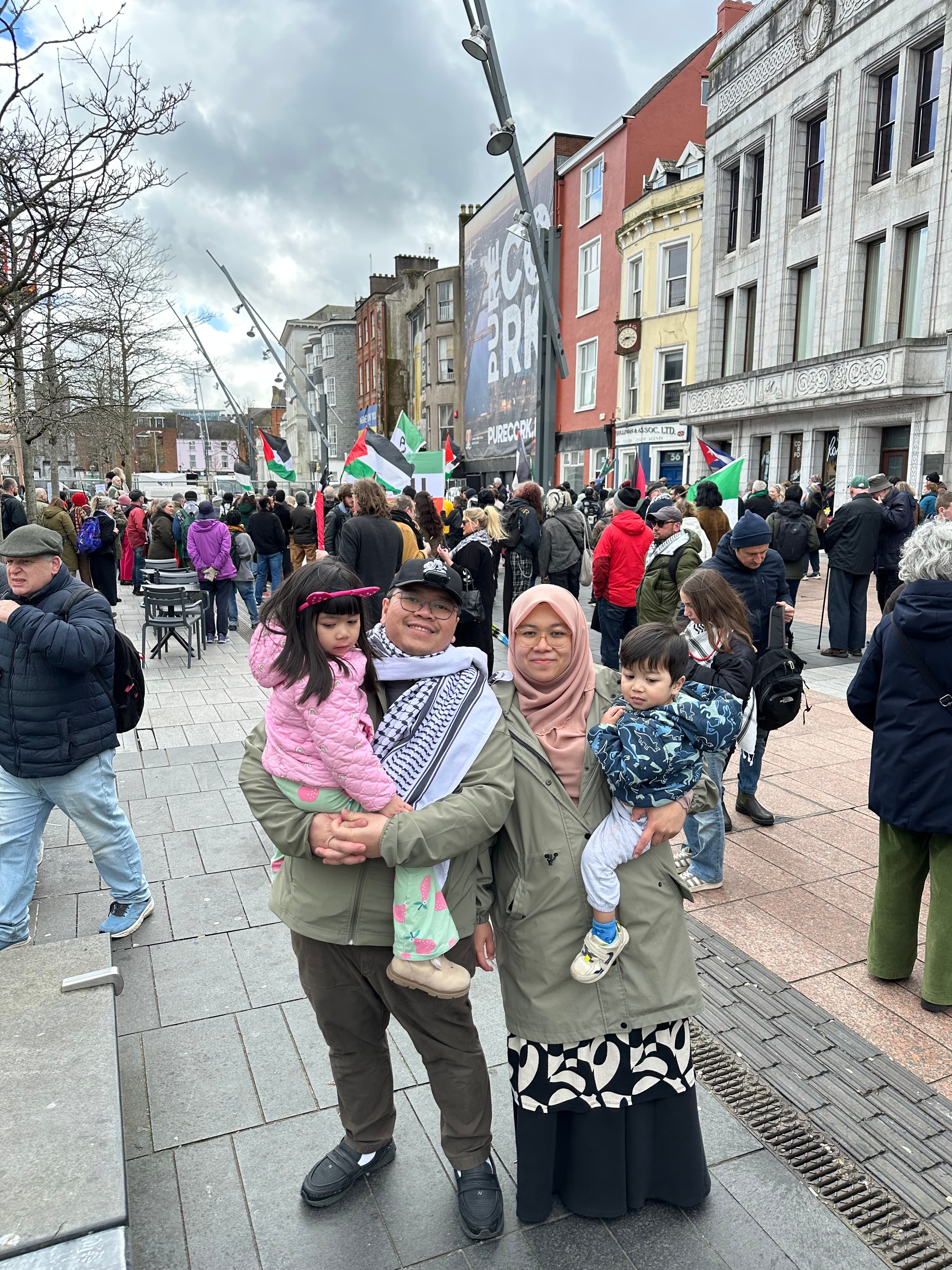
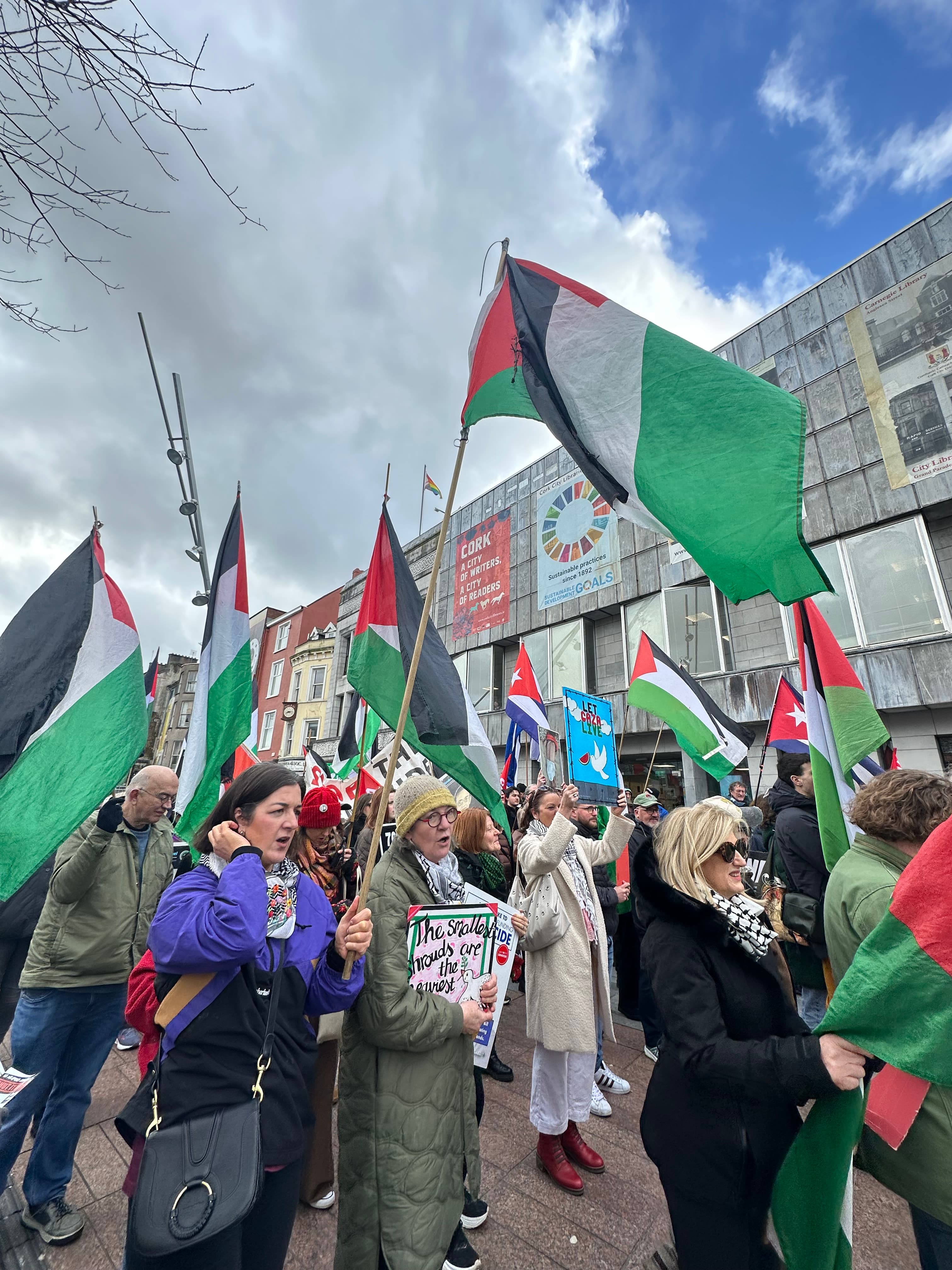
The Irish in Cork, are people with no religious or ethnic tie to the Levant, yet they march because they recognize the echo of their own colonial history in the cries of Gaza. If those who share neither faith nor blood can find the time to stand in the rain every Saturday, the absence of the Ummah becomes not just a statistic, but a heartbreak.
What the Ummah Must Do:
A Solution Framework
To move from a "theoretical community" to a "functional power," the Ummah needs to pivot toward strategic action. Here are four essential steps:
1. Transition from Apathy to "Civic Jihad"
Muslims in the diaspora must realize that their presence is their power. Protesting is the bare minimum; political lobbying is the next level. The Ummah must organize as a voting bloc that demands ethical foreign policy. If 5% of the community shows up to a protest, politicians ignore them. If 95% show up to the polls with a unified agenda, they become impossible to ignore.
2. Reclaim the Economic Narrative
The British (and modern powers) gained control through resources and trade. The Ummah must focus on economic sovereignty. This means:
- Supporting Muslim-owned businesses and ethical supply chains.
- Moving away from reliance on brands that fund or profit from oppression.
- Investing in "Waqf" (endowments) that fund independent media to counter the "bad guy" tropes found in Bollywood and Hollywood.
3. Radical Unity over Sectarianism
The "divide and conquer" strategy only works if the community stays divided. We must stop prioritizing internal theological debates or nationalistic pride over the survival of our brothers and sisters. A "Pan-Islamic" mindset doesn't mean erasing culture; it means ensuring that a threat to a Muslim in Gaza is felt as a threat by a Muslim in Cork, Cardiff, Kuala Lumpur, or Karachi.
4. Educational De-colonization
As the driver noted, the roots are in the history books. The Ummah needs to invest in its own educational institutions to teach history from a non-colonial lens. Understanding how we were divided is the first step toward learning how to reunite.
Ultimately, that short Uber ride through Cork revealed a stinging irony: while those with no ties to the faith lead the charge for justice every Saturday, the community itself often remains on the sidelines, paralyzed by the lingering shadows of colonial division or the comforts of the West.