The Hearts We Set Out to Serve
What Volunteering Taught Me About Giving, Connection, and the Future of the Ummah
“Remember that volunteer program we tried to join before that didn't work out? See how Allah held it back just to bring you to a much better one, with the right people at the right time.”
Those words from my friend, Hanan, resonated deeply within my heart. We may draft our own plans, but ultimately it is the perfection of Allah's design, His Qadr, that guides our footsteps exactly where they need to be.
Looking back, I realised how true those words were for my own journey into community work. When we first decided to look for volunteering opportunities in our local area, things did not go as planned. No one else showed up, and we left feeling discouraged. For months afterwards, we stopped searching.
Then I was introduced to ISMA and came across the R&R programme, an initiative designed to encourage participants to build new volunteering projects. Even though I felt completely underqualified, with no prior experience initiating or running a project, I decided to take the leap.
That decision marked the beginning of the UPLift Project and, without me realising it at the time, became a turning point in my life.
Stepping Out of the Comfort Zone
Starting out on-site, I was consumed by self-doubt. I kept asking myself whether I had anything truly valuable to offer, or whether the project would even go smoothly.
But stepping onto the ground quickly taught me about genuine teamwork and mutual support. Things rarely happened exactly as we expected. Working with children meant learning how to adapt in the moment, respond to different personalities and situations, and sometimes leave the original plan behind when something else was needed.
Although I originally joined with a media role, I often found myself stepping far beyond it to manage whatever came my way. Every challenge stretched me beyond the limits I had quietly drawn around myself.
Over the course of the project, I began to understand that making a real difference does not necessarily require a huge organisation or years of expertise. Sometimes it simply begins with a few people who care enough to start.
Later, when a friend approached me for ideas on how to organise charitable activities for her college association, I found myself encouraging her to start a student-led volunteering project of her own.
It was a small moment, but it made me realise how much my own perspective had changed. Joining a volunteer effort is not only an act of charity. It changes the way you understand your own responsibility towards other people.
Kindness as a Universal Language
As the weeks went on, one truth became increasingly clear: kindness is a universal language. It does not matter where someone comes from or what background they carry. Genuine kindness is understood by everyone.
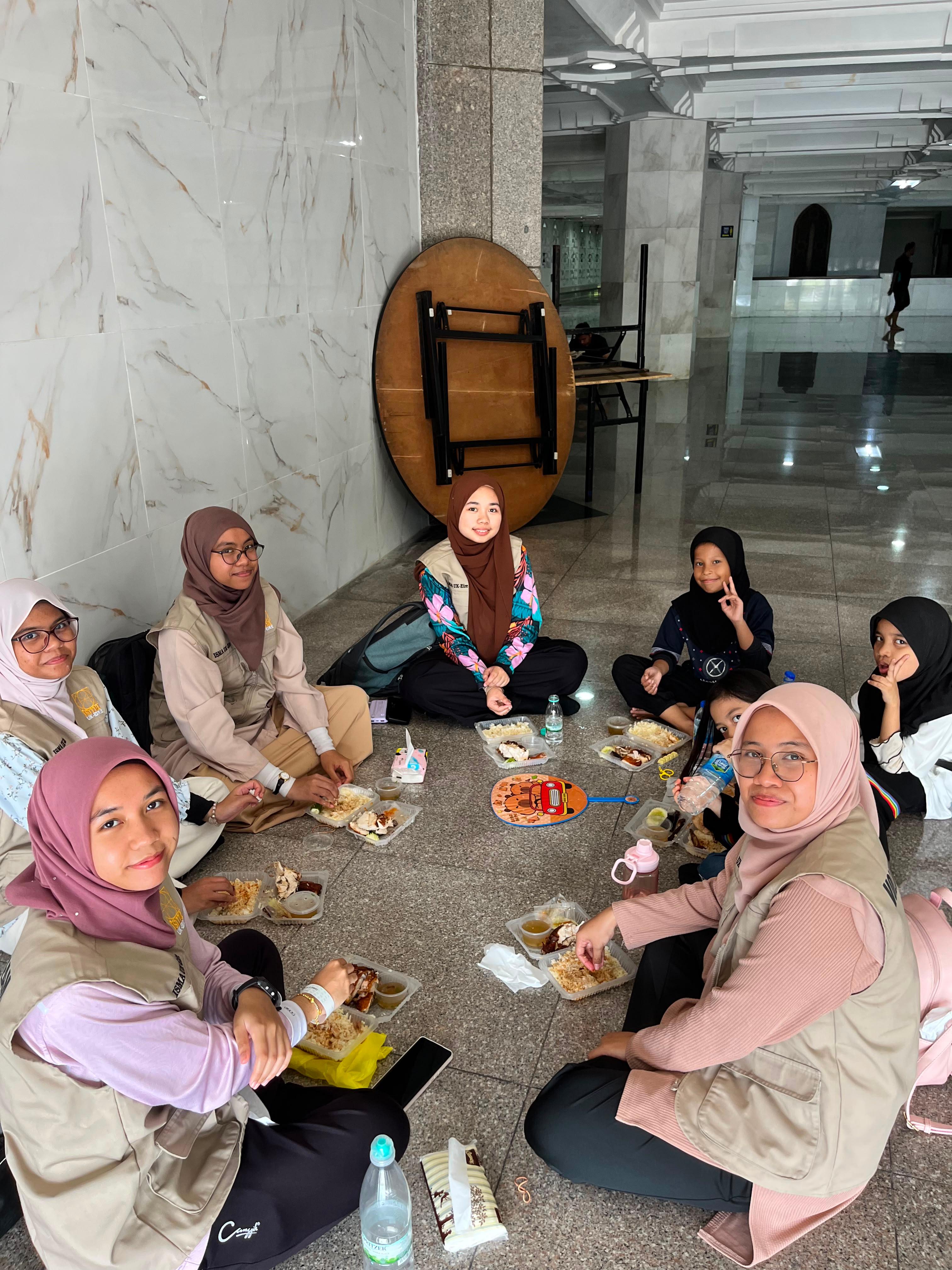
One of the most memorable moments of my volunteering experience took place at Rumah Kanak-Kanak, where we worked with children ranging from toddlers to thirteen-year-olds.
We arrived early, and I had a short conversation with the security guard on duty. He told me that the children always eagerly anticipated visitors. But during that same conversation, he also opened my eyes to something I had not fully understood before.
Not all of the children there were orphans. Some came from severely underprivileged families. Others had been placed there by court order, while some had entered care under entirely different circumstances.
Suddenly, the children in front of me were no longer simply part of a volunteering programme. Every one of them carried a story that existed far beyond the few hours we would spend together.
When our scheduled activities eventually came to an end that evening, the children were visibly disappointed. Some had hoped we might stay through the night.
Yet when I asked what they would do after we left, they looked up with bright, unbothered smiles and simply said they would return to their dormitories.
Later, I had the chance to spend time with some of the babies. As I helped feed them, a quiet wave of emotion came over me. I found myself thinking about these innocent lives growing up without many of the ordinary forms of family warmth that so many of us experience every day without even noticing.
Yet despite everything, they smiled. They played. They continued discovering the world around them.
In their innocence, they embodied a form of gratitude —shukr — that adults so easily forget.
What Kind of Examples Are We Leaving Behind?
Children are constant mirrors. They absorb and imitate much more than we realise.
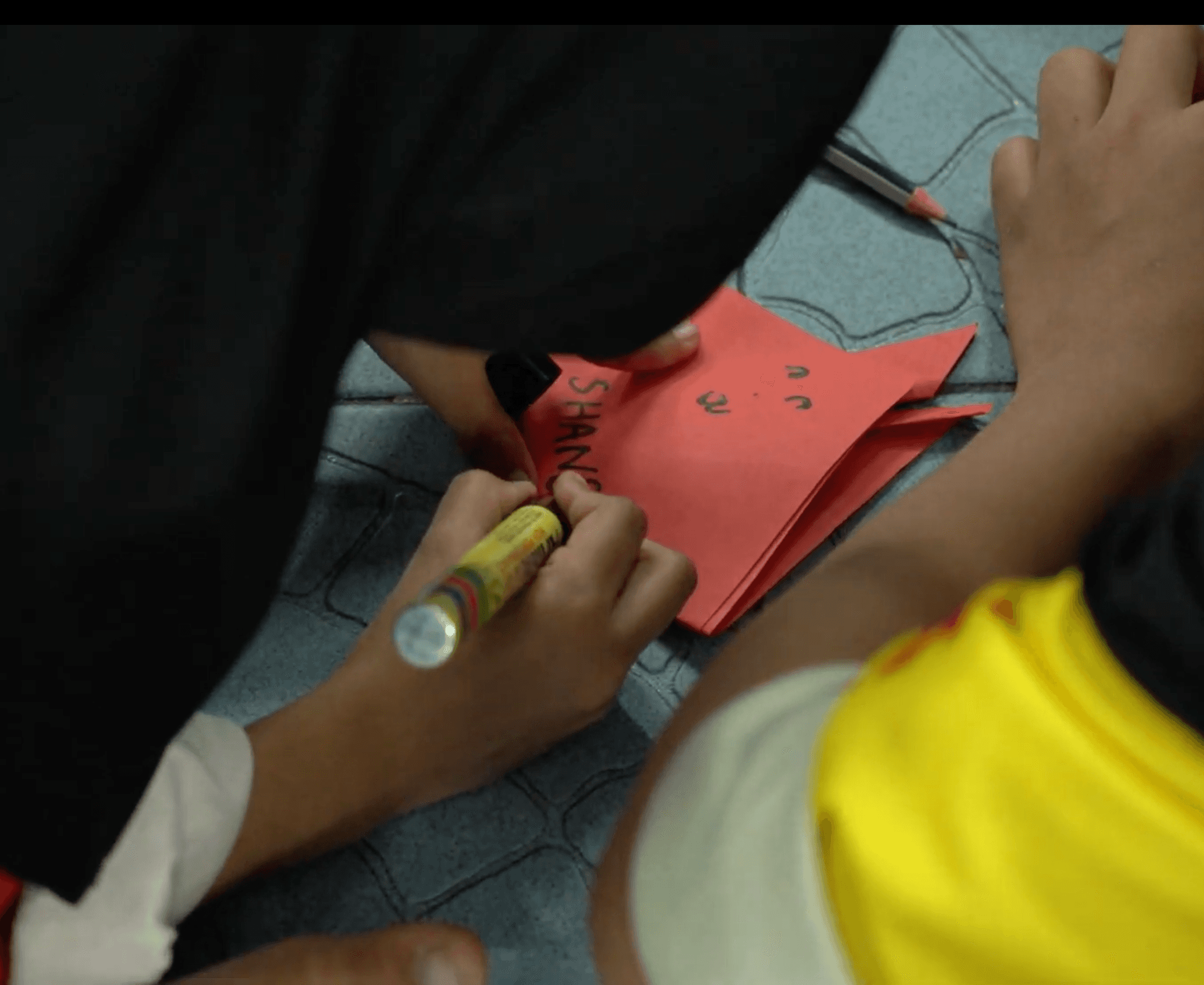
During the programme, a little girl named Intan became particularly attached to me. During an origami session, I taught her how to fold a small cat. On the paper, I wrote a short note telling her that I loved her and hoped to see her again in the future.
To my surprise, she carefully copied my words back onto her own paper for me. She even added a small prayer, asking Allah to grant me Jannah.
I still keep that piece of paper today.
What seemed like a small interaction became a reminder of the enormous responsibility adults carry as examples. Children notice what we say, how we behave, what we value, and how we treat the people around us.
“If children naturally reflect the world we place in front of them, what path are we building for the children of the Ummah to follow?”
During an interview with a fellow volunteer from another organisation, I met a former journalist whose understanding of service had been shaped by extraordinary circumstances. Having survived war during her childhood, she asked me a deceptively simple question:
“What makes you continue doing volunteering work?”
Her question stayed with me because it shifted the conversation away from individual programmes and towards commitment.
Volunteering cannot only be something we do when an opportunity conveniently appears. Genuine service asks what we are willing to keep doing when the excitement of a programme has passed.
It made me look around at our society and think about the things we are building through our ordinary routines.
Are our daily efforts paving a clearer path for the next generation of Muslims? Or are we leaving them to navigate a world lacking in empathy, support, and guidance?
Every act of service, no matter how small, becomes a brick laid in the foundation of their future.
The Reflection
Looking back at how a cancelled plan eventually led me towards this journey, I began to understand the quiet perfection of Allah's Qadr.
I had set out hoping to make a difference in other people's lives, but somewhere along the way, it was the people I met who transformed mine.
This experience opened my eyes to struggles that had always existed around me but which I had never truly seen. It showed me what I was capable of when I stepped forward, and it made me realise how much of the world I had previously been blind to.
There is still so much waiting to be served, and that is why I want to continue walking on this path.
“The example of those who spend their wealth in the way of Allah is like a seed of grain which grows seven spikes; in each spike is a hundred grains. And Allah multiplies His reward for whom He wills.”
Surah Al-Baqarah 2:261
In the ecosystem of the Ummah, giving is never a one-way street. The time, energy, and love we put into the world have a way of returning to nourish our own souls.
Perhaps that is one of the most beautiful things about service. We may begin by thinking about what we can give to someone else, only to realise afterwards how deeply the experience has shaped us too.
Because in the end, the more you give, the more you truly receive.